
Child Showing ADHD Symptoms? It Could Be Sleep Apnea
The Difference Between ADHD Symptoms and Sleep Apnea
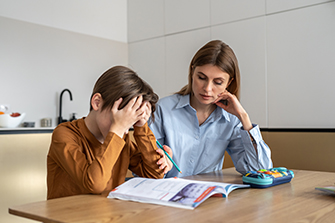
Is your child having a difficult time staying focused, paying attention, retaining information, or sitting still? Does it seem like they are on hyperdrive all the time, have difficulty following rules, and can’t relax? This might sound a lot like the core symptoms of ADHD, which they are. However, it could also be a totally separate issue: Pediatric sleep apnea. Before you jump to giving your child medication for ADHD, it is important to explore all options, including sleep apnea treatment. Keep reading to learn more about the difference between ADHD and sleep apnea, how sleep apnea causes ADHD-like symptoms, and how you can treat sleep apnea in children.
What is ADHD?
An estimated 8.4% of children and 2.5% of adults have ADHD (Danielson, 2018; Simon, et al., 2009). ADHD is often first identified in school-aged children when it leads to disruption in the classroom or problems with schoolwork.
Attention-deficit/hyperactivity disorder (ADHD) is one of the most common mental disorders affecting children. Symptoms of ADHD include inattention (not being able to keep focus), hyperactivity (excess movement that is not fitting to the setting) and impulsivity (hasty acts that occur in the moment without thought).
ADHD is considered a chronic and debilitating disorder and is known to impact the individual in many aspects of their life, including academic and professional achievements, interpersonal relationships, and daily functioning (Harpin, 2005). ADHD can lead to poor self-esteem and impaired academic and social function in children when not appropriately managed (Harpin et al., 2016). Adults with ADHD may experience poor self-worth, sensitivity towards criticism, and increased self-criticism, possibly stemming from higher levels of criticism throughout life due to their symptoms (Beaton, et al., 2022)..
Symptoms of ADHD
- Fidgeting
- Excessive energy
- Not sitting still
- Being talkative.
- Impulsivity
- Doesn’t pay close attention to details or makes careless mistakes in school or job tasks
- Has problems staying focused on tasks or activities, such as during lectures, conversations, or long reading.
- Does not seem to listen when spoken to
- Does not follow through on instructions and doesn’t complete schoolwork, chores or job duties
- Has problems organizing tasks and work
- Avoids or dislikes tasks that require sustained mental effort, such as homework
- Often loses things needed for tasks or daily life, such as school papers, books, keys, wallet, cell phone, and eyeglasses.
- Is easily distracted by unrelated things or thoughts.
- Forgets daily tasks, such as doing chores and running errands. Older teens and adults may forget to return phone calls, pay bills, and keep appointments.
What is Sleep Apnea?
Sleep apnea is a common condition that occurs when your breathing stops and restarts many times while you sleep. This can prevent your body from getting enough oxygen. If someone tells you that you snore or gasp for air during sleep, you may want to talk to your healthcare provider. You may also want to ask your provider about sleep apnea if you experience other symptoms of poor sleep quality, such as excessive daytime sleepiness.
There are two types of sleep apnea.
- Obstructive sleep apnea, also called OSA, happens when your upper airway becomes blocked many times while you sleep. The blockage can reduce or completely stop airflow. This is the most common type of sleep apnea. Factors such as obesity, large tonsils, or changes in your hormone levels can narrow your airway. Any of these factors could increase your risk for obstructive sleep apnea.
- Central sleep apnea occurs when your brain does not send the signals needed to breathe. Health conditions that affect how your brain controls your airways and chest muscles can cause central sleep apnea.
Symptoms of Sleep Apnea
- Frequent loud snoring
- Breathing that starts and stops
- Gasping for air
- Daytime sleepiness and tiredness
- Problems with learning
- Difficulty focusing
- Delayed reactions
- Dry mouth
- Fatigue
- Headaches, especially in the morning
- Insomnia
- Weight gain or inability to lose weight
- Sexual dysfunction or decreased libido
- Waking up often during the night to urinate
How Does Sleep Apnea Cause ADHD Symptoms?
Sleep apnea does not cause ADHD or ADHD symptoms, as ADHD is a neurological disorder. While there is no known cause for ADHD, it is suspected that it is a genetic issue. However, sleep apnea does cause symptoms that are very similar to ADHD, which can lead to most parents misunderstanding their children’s behavior.
It is very difficult to tell these two conditions apart when looking at the ADHD-like symptoms alone. That is why it is important to take note of the extra sleep apnea symptoms to see if your child is displaying any of those. Not all people, including both children and adults, will display all the symptoms of sleep apnea, even the hallmark ones. This is why it is important to make note of any and all symptoms you notice and go over them with a sleep apnea specialist.
In addition, it is important to get your child evaluated by a medical professional to rule out sleep apnea before you move forward with ADHD medication treatment. ADHD treatment may not be effective on a child whose symptoms stem from sleep apnea. They may worsen when the sleep apnea becomes worse, which leaves parents even more confused and desperate for answers.
ADHD-like symptoms can stem from sleep apnea because of fragmented sleep. When you wake up multiple times a night, it can cause you to become overtired in the morning, which leads to irritability, anxiety, and other behavioral issues. You may have experienced this many times throughout your life after a long, restless night—imagine being a child who wakes up this way every single day.
Poor quality sleep from the reduced oxygen levels your child receives during their sleep can impact their brain function. It can lead to memory retention problems and other issues.
How Do I Manage ADHD Symptoms With My Child?
A child with ADHD-like symptoms can be difficult to manage for many parents. If you are not sure how to support your child while navigating a diagnosis, here are some tips:
- Encourage boundaries and routine. The more consistency your child receives when it comes to rules, boundaries, and routine, the more it will help with their anxiety and understanding of their own behavior.
- Use positive reinforcement. A child with ADHD-like symptoms will constantly hear “no,” as well as punishments and other negative feedback throughout the day. Instead, flip it around and give your child positive reinforcement, rewards, or praise when they follow rules or finish a task correctly.
- Let them be active. Many children with ADHD-like symptoms are hyperactive and need to move their bodies. Encourage exercise and activity, especially before long periods of needing to be still (such as class time, a doctor’s appointment, or a restaurant visit). This can also help with their sleep quality.
- Seek support when needed. Managing a child with ADHD-like symptoms can be difficult. Don’t take out your anger, anxiety, or tiredness on your child. Seek support when needed, especially professional support, to help your child live a more normal life. Make sure you find time for self-care, and get all of your fellow caregivers on the same page as far as boundaries and rules, so there is less confusion to manage throughout the day.
Treatment for ADHD Symptoms with Airway Expansion
Wondering what treatment will be like with your child with ADHD-like symptoms if they are diagnosed with a sleep disorder?
Multiple studies show a strong link between pediatric OSA and the incidence of ADHD symptoms, with attention deficits reported in up to 95% of pediatric OSA patients. Other studies show that moderate to severe pediatric OSA patients are most likely to exhibit ADHD symptoms. By 2022, an estimated 7.1 million U.S. children and adolescents (about 1 in 9) had been diagnosed with ADHD, according to the CDC. Multiple studies (see Sedky et al 2014) have shown that treatment for OSA can dramatically reduce or eliminate ADHD symptoms.
In this current dataset just released by Vivos, children treated with the Vivos DNA appliance reported a 50% decrease in the validated Pediatric Sleep Questionnaire (PSQ), which measures snoring, sleep apnea, and restless legs (p<0.00001). Moreover, these children showed a 58% decrease in symptoms of sleep disordered breathing and ADHD symptoms such as disruptive behavior and hyperactivity.
Vivos believes these significant improvements in OSA and ADHD symptoms may allow these children to improve their behavioral performance in school and their academics, making a profound difference in their quality of life. The majority of this improvement was shown to occur in the first six months of treatment.
The Vivos Method
When you think of sleep apnea treatment, you may immediately picture a CPAP machine. CPAP machines do not treat the root cause of sleep apnea, and can be very difficult for children to use, maintain, and be comfortable with.
Vivos’ devices have been cleared by the U.S. Food and Drug Administration (FDA) for adult patients diagnosed with all severity levels of OSA and moderate-to-severe OSA in children ages 6 to 17. Vivos’ groundbreaking Complete Airway Repositioning and Expansion (CARE) devices are the only FDA 510(k) cleared technology for treating severe OSA in adults and the first to receive clearance for treating moderate to severe OSA in children.
If you suspect your child is suffering from ADHD-like symptoms from sleep apnea and want help, Gorman Health and Wellness is one of the few places to prescribe it. Don’t sign your child up for a lifetime of being chained to a noisy, bulky, and uncomfortable CPAP machine.
Treatment for Sleep Disorders in Children with Gorman Health and Wellness
Your child does not have to suffer from the negative effects of poor-quality sleep any longer.
Dr. Gorman is a part of the breathing wellness movement, which aims to increase awareness and improve treatment for sleep-related airway conditions like sleep apnea. He has partnered with organizations focused on collaborating with dentists to apply the sciences of Craniofacial Epigenetics (the study of cranial modifications caused by gene expression as opposed to genetic code alteration) and Pneumopedics® (the practical application of oral appliance therapy and non-surgical airway remodeling) in the management of sleep apnea.
Together, the application of these sciences allows for the underlying causes of airway obstruction to be treated in 98% of cases, resulting in a high success rate among sleep apnea patients. For every sleep apnea case at our practice, Dr. Gorman will gather patient data and determine the patient’s specific needs based on home sleep test results, dental impressions, CT scans, and images. Our state-of-the-art technology, paired with Dr. Gorman’s experience with sleep disorders, allows him to find the most effective treatment plan for each individual’s particular case, yielding improved daytime and nighttime breathing for the patient.
“I have been helping people suffering from Sleep Apnea with a non-invasive, clinically approved treatment method. This method has allowed my patients to sleep with far fewer events per hour, allowing them to get rid of their CPAP and BiPAP machines. Imagine not having to use one of those machines, getting back a much greater quality of life along with the benefits of being able to breathe better.” – Dr. Gorman.
For more information on Dr. Gorman, improving your child’s sleep apnea, and increasing their mood, attention, focus, and performance in school, contact us today.
